About Us
Examples of What We Produce
Structural Body-In-White Specialist
From the smallest tapping plate to the largest roof rails and bumpers, from the simplest stamping to elaborate assemblies, Wico has been instrumental in providing automotive OEMs and Tiers dependable, cost-effective products for more than 80 years.
- Body-Structural / Integrated Components
- Upper & Underbody Subassemblies
- Light-Weight Emphasis
- Design Optimization
- Maximum Cost Savings
Specialties
These Revolutionary Innovations
Replace Secondary Processes
Discover significant financial savings and quality improvements by eliminating secondary assembly processes.
Cold-Formed Extrusion Stamping
Cold-Formed Extrusions:
Stamping and tapping have been the backbone of Wico since the 1980s, making us the industry’s extrusion experts. With optional in-die tapping, nothing beats the durability and cost savings of Wico’s extruded parts.
Unlike weld nuts made from low-carbon steel, fasteners are formed during the stamping process as part of the component, thus creating a high-strength, seamless, singular unit as the finished product. Wico’s extrusions effortlessly exceed at least twice the standard proof load requirements with perfectly aligned fasteners and no breakage concerns – each and every run. Wico’s patented process, perfected over the years, has proven to:
Eliminate
- Extra cost of stand-alone fasteners
- Secondary processes after stamping (tapping, welding)
- Concerns of cold welds, off location fasteners, etc.
Provide
- Durable components with the ultimate integrity & structural joint strength
- Precision-engineered parts to meet rigorous automotive demands
- Faster production time (singular process, “stamp and ship”)
- Cost savings with less rejections and greater peace of mind
In-Die Assembly
In-Die Assembly
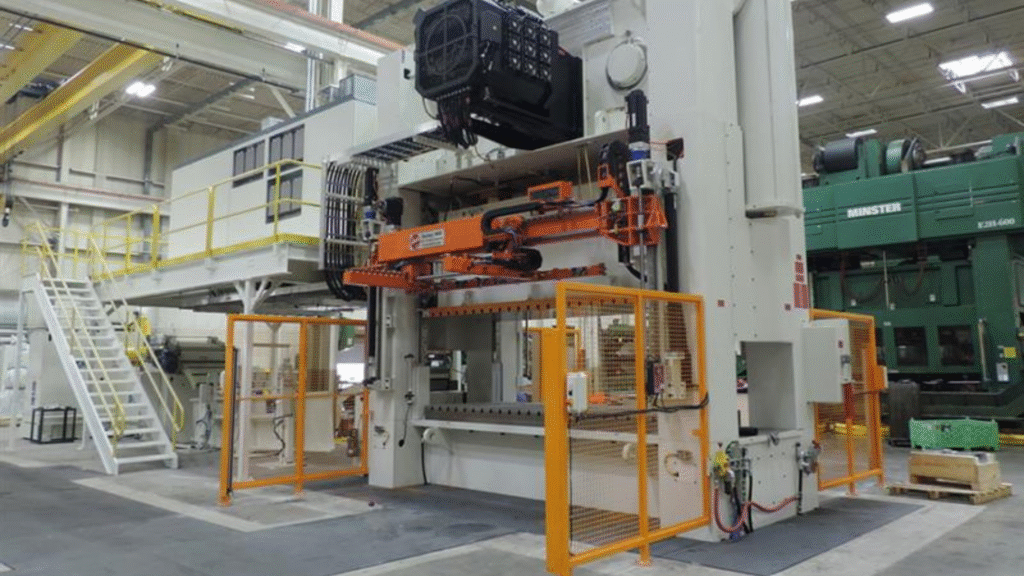
Wico has the necessary capabilities and experience to not only tap parts in the press, but also to insert purchased components directly into the stamping process, thereby taking advantage of part control and press force to accurately locate/pierce/upset fastening components into a broad range of sheet metal geometries.
Secondary processes and associated costs are eliminated by inserting nuts, studs, spacers, etc. into a base stamping before the part exits the die. The process can be incorporated in both progressive and transfer stamping applications, using an assortment of components.
Overview:
Wico has the specialized understanding and experience required to design and develop customized in-die assembly solutions
Currently assembling up to six components onto a main stamping to produce a “sub-assembled” product before the part exits the press
Stroke utilization for full energy to stamp & assemble high-strength alloys at any stage in the press.
Fully Integrated Specialized Assemblies
“SPR”: Self-Piercing Rivet Assemblies
While Wico maintains superior welding capabilities for traditional assemblies, our SPR technology is the high-performance alternative for the future. By replacing heat with tons of mechanical force, we deliver a stronger joint in less time, helping customers achieve lightweighting goals without the ‘thermal tax’ of traditional welding.
SPR Assemblies are proven to:
- Improve production efficiency – no need to pre-drill and align holes
- Eliminate worries of cold, missing or out-of-alignment weld issues
- Effectively reduce part weight, important in today’s market of vehicle ‘lightweighting’
- Be the best solution for locking together dissimilar materials such as steel to aluminum
- Provide more flexibility for alloys that are difficult to weld or have difficult-to-weld spots
- As a cold-forming process, prevent “HAZ” (heat affected zone) and possible part warping
- Resist part fatigue far better than spot welding
- Be ‘Greener’ by eliminating weld dust, heat and fumes
Cold-Formed Extrusion Stamping
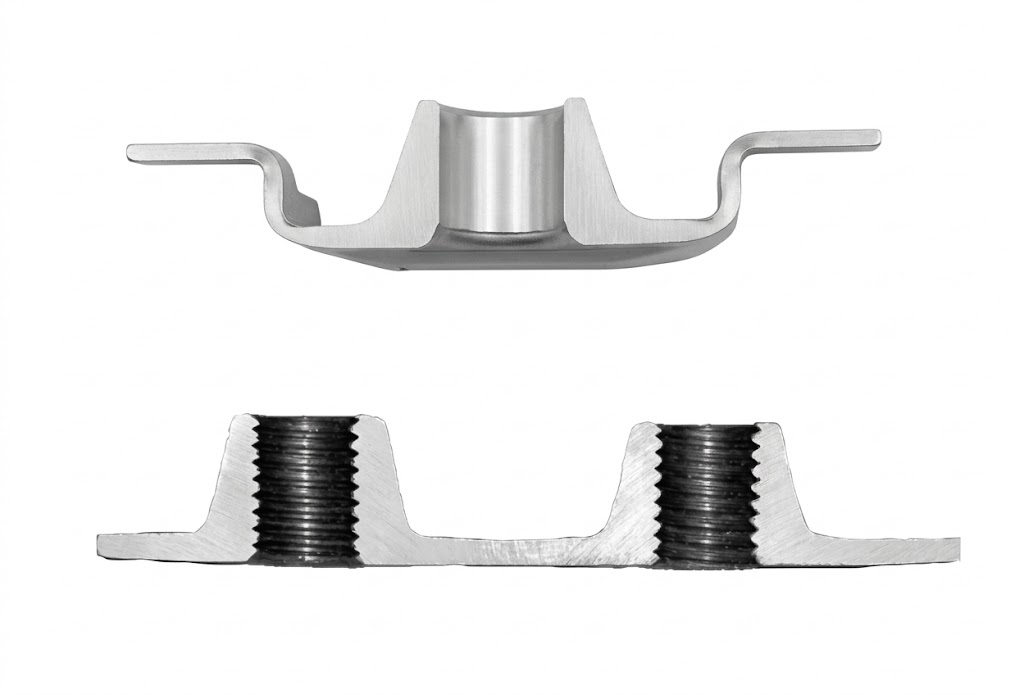
Cold-Formed Extrusions:
Stamping and tapping have been the backbone of Wico since the 1980s, making us the industry’s extrusion experts. With optional in-die tapping, nothing beats the durability and cost savings of Wico’s extruded parts.
Unlike weld nuts made from low-carbon steel, fasteners are formed during the stamping process as part of the component, thus creating a high-strength, seamless, singular unit as the finished product. Wico’s extrusions effortlessly exceed at least twice the standard proof load requirements with perfectly aligned fasteners and no breakage concerns – each and every run. Wico’s patented process, perfected over the years, has proven to:
Provide
- Durable components with the ultimate integrity & structural joint strength
- Precision-engineered parts to meet rigorous automotive demands
- Faster production time (singular process, “stamp and ship”)
- Cost savings with less rejections and greater peace of mind
Eliminate
- Extra cost of stand-alone fasteners
- Secondary processes after stamping (tapping, welding)
- Concerns of cold welds, off location fasteners, etc.
In-Die Assembly
In-Die Assembly
Wico has the necessary capabilities and experience to not only tap parts in the press, but also to insert purchased components directly into the stamping process, thereby taking advantage of part control and press force to accurately locate/pierce/upset fastening components into a broad range of sheet metal geometries.
Secondary processes and associated costs are eliminated by inserting nuts, studs, spacers, etc. into a base stamping before the part exits the die. The process can be incorporated in both progressive and transfer stamping applications, using an assortment of components.
Overview:
- Wico has the specialized understanding and experience required to design and develop customized in-die assembly solutions
- Currently assembling up to six components onto a main stamping to produce a “sub-assembled” product before the part exits the press
- Stroke utilization for full energy to stamp & assemble high-strength alloys at any stage in the press.
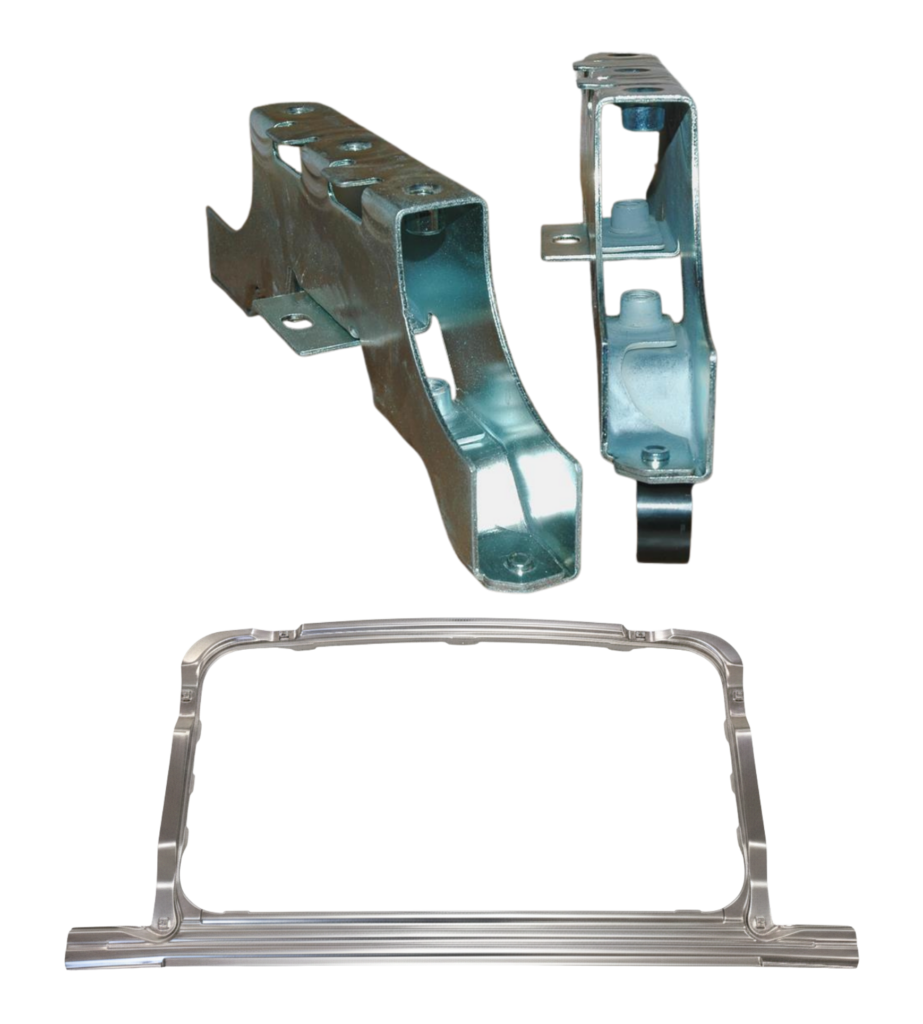
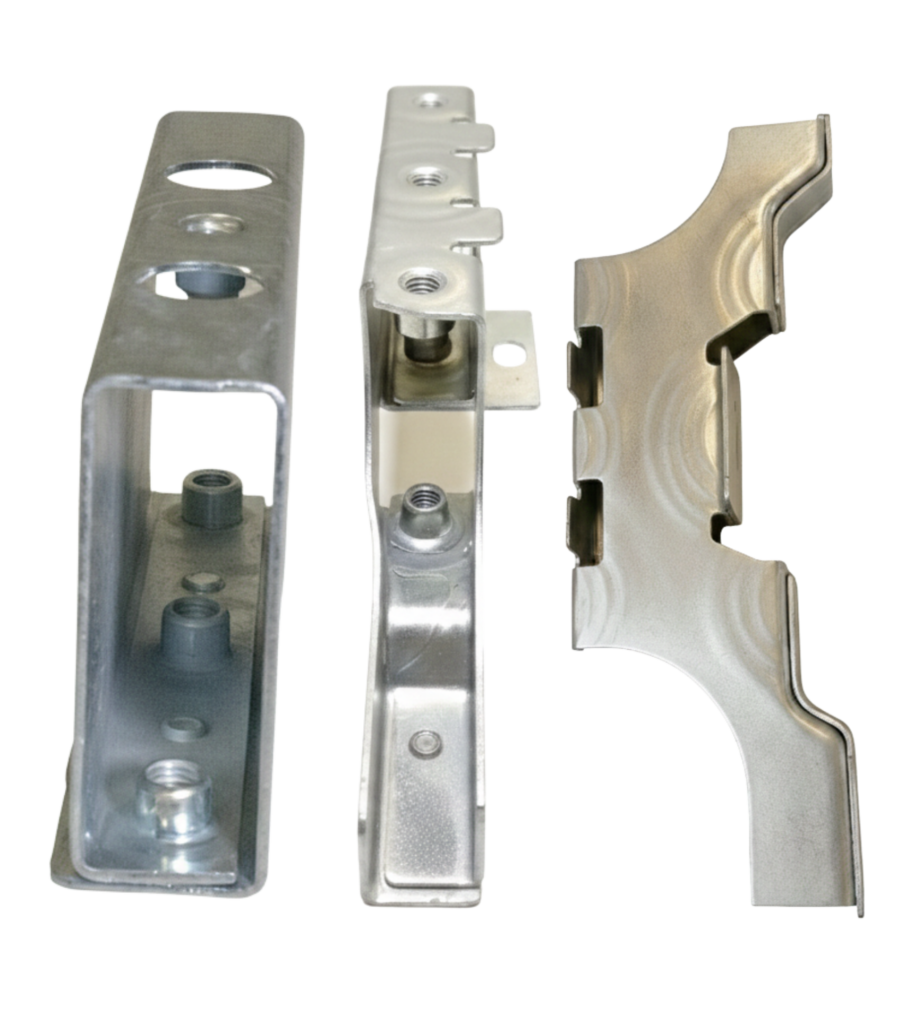
Fully Integrated Specialized Assemblies
“SPR”: Self-Piercing Rivet Assemblies
While Wico maintains superior welding capabilities for traditional assemblies, our SPR technology is the high-performance alternative for the future. By replacing heat with tons of mechanical force, we deliver a stronger joint in less time, helping customers achieve lightweighting goals without the ‘thermal tax’ of traditional welding.
SPR Assemblies are proven to:
- Improve production efficiency – no need to pre-drill and align holes
- Eliminate worries of cold, missing or out-of-alignment weld issues
- Effectively reduce part weight, important in today’s market of vehicle ‘lightweighting’
- Be the best solution for locking together dissimilar materials such as steel to aluminum
- Provide more flexibility for alloys that are difficult to weld or have difficult-to-weld spots
- As a cold-forming process, prevent “HAZ” (heat affected zone) and possible part warping
- Resist part fatigue far better than spot welding
- Be ‘Greener’ by eliminating weld dust, heat and fumes
materials
Material Evolution
From the most common material to the more exotic, Wico is an industry leader focused not just on the present, but on anticipating the needs of tomorrow. Whether it is refining the steel standards of today or engineering the lightweight, high-performance alloys of the future, we provide the technical agility global OEMs and Tiers need to stay ahead of the curve.
We work with material thicknesses from < 0.5mm up to 6mm with room to grow.
The Foundation
Steel
Whatever grade is required for your project, we run it: HRPO, Hot-or-Cold Rolled HSLA, CRCQ, Bake Hardened, Galvanized and Stainless to name the more common grades. We specialize in extruding HSLA material – a complex process where we consistently outperform the competition.
The Benchmark
Aluminum
Wico Metal Products was key to bringing Ford’s first Aluminum full-size pickup truck to fruition – not only as a supplier but partnering with Ford to perfect their first-ever aluminum formula and process. From that innovation, we have scaled to producing millions of high-volume parts annually, mastering the complexities of diverse aluminum grades.
The Future
High Strength Alloys and Dual Phase Materials
Wico is at the forefront of the industry's shift toward High-Strength Alloys and Dual-Phase materials. By mastering these complex metals, we produce lightweight components that meet the highest standards for crash performance and fuel economy. From common alloys to advanced high-strength solutions, we deliver durability at every grade.
The Foundation
Steel
Whatever grade is required for your project, we run it: HRPO, Hot-or-Cold Rolled HSLA, CRCQ, Bake Hardened, Galvanized and Stainless to name the more common grades. We specialize in extruding HSLA material – a complex process where we consistently outperform the competition.
The Benchmark
Aluminum
Wico Metal Products was key to bringing Ford’s first Aluminum full-size pickup truck to fruition – not only as a supplier but partnering with Ford to perfect their first-ever aluminum formula and process. From that innovation, we have scaled to producing millions of high-volume parts annually, mastering the complexities of diverse aluminum grades.
The Future
High Strength Alloys and Dual Phase Materials
Wico is at the forefront of the industry's shift toward High-Strength Alloys and Dual-Phase materials. By mastering these complex metals, we produce lightweight components that meet the highest standards for crash performance and fuel economy. From common alloys to advanced high-strength solutions, we deliver durability at every grade.
If your metal commodity is NOT in automotive but is made in a press,
let us know – we are always interested in exploring new ideas.
Press Specifications
View Specifications here
We work with material thickness from < 0.5mm up to 6mm with room to grow